Jayne Y. Liu

Work

About

Contact me

Jayne Y. Liu

Contact me

I'm Jayne, a product designer rooted in how people learn and change behavior.

I'm Jayne, a product designer rooted in how people learn and change behavior.

I'm Jayne, a product designer rooted in how people learn and change behavior.

Teaching taught me that information alone doesn't change behavior.
That insight followed me into enterprise SaaS and shapes how I approach every design problem.

At Cisco, my work has spanned activation, adoption, and the gap between what a product offers and what users actually do with it. Getting there meant building research infrastructure and driving projects from problem framing through shipping — scoping, designing end-to-end, and establishing success metrics. The work I'm most proud of wasn't just what shipped. It was what I put in place so the right thing could.

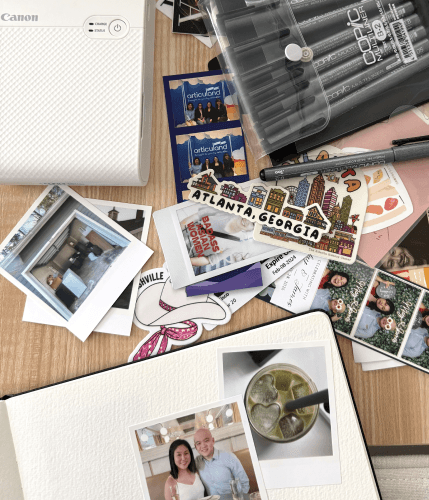
Outside of work, I enjoy hand lettering cards, exploring the latest High Museum exhibits, and nature hikes.

At Cisco, my work has spanned activation, adoption, and the gap between what a product offers and what users actually do with it. Getting there meant building research infrastructure and driving projects from problem framing through shipping — scoping, designing end-to-end, and establishing success metrics. The work I'm most proud of wasn't just what shipped. It was what I put in place so the right thing could.

Outside of work, I enjoy hand lettering cards, exploring the latest High Museum exhibits, and nature hikes.

At Cisco, my work has spanned activation, adoption, and the gap between what a product offers and what users actually do with it. Getting there meant building research infrastructure and driving projects from problem framing through shipping — scoping, designing end-to-end, and establishing success metrics. The work I'm most proud of wasn't just what shipped. It was what I put in place so the right thing could.

Outside of work, I enjoy hand lettering cards, exploring the latest High Museum exhibits, and nature hikes.

Hover to see me off the clock 👀

FAQ

How do you show up on a new team?

I ask a lot of questions early to build the kind of trust that makes the work go faster later. I want to understand where the team is coming from, what's been tried, and what the constraints actually are before pushing toward what's possible. I'm heavy on vision but grounded in logistics: knowing the ideal makes it intuitive to prioritize what's most impactful now.

How do you show up on a new team?

I ask a lot of questions early to build the kind of trust that makes the work go faster later. I want to understand where the team is coming from, what's been tried, and what the constraints actually are before pushing toward what's possible. I'm heavy on vision but grounded in logistics: knowing the ideal makes it intuitive to prioritize what's most impactful now.

How are you using AI in your design work?

As a thinking partner and speed layer. I use Claude to pressure-test research synthesis, sharpen copy, and analyze data. For early explorations, I've been experimenting with Figma Make and Cursor. The most valuable thing a team can do right now is make space to share what's actually working: what AI amplifies, where it falls short, and how to implement it given your constraints. That's why I've run workshops for my team to experiment, build, and iterate on current practices together.

How are you using AI in your design work?

As a thinking partner and speed layer. I use Claude to pressure-test research synthesis, sharpen copy, and analyze data. For early explorations, I've been experimenting with Figma Make and Cursor. The most valuable thing a team can do right now is make space to share what's actually working: what AI amplifies, where it falls short, and how to implement it given your constraints. That's why I've run workshops for my team to experiment, build, and iterate on current practices together.

You're into hand lettering. Why cards?

It started with a calligraphy class at Chinese school. My dad signed me up, and I loved how small shifts in brush pressure changed the mark, how every stroke carried weight. Cards felt like the natural extension: designing something specific for one person, for one moment. And even more so, I love the idea that something I've created can be a vehicle for connection.

You're into hand lettering. Why cards?

It started with a calligraphy class at Chinese school. My dad signed me up, and I loved how small shifts in brush pressure changed the mark, how every stroke carried weight. Cards felt like the natural extension: designing something specific for one person, for one moment. And even more so, I love the idea that something I've created can be a vehicle for connection.

You studied art. What did you actually make?

Large-scale drawings and installations based on nature. I was interested in how scale creates wonder, like when you're amidst something much larger, and that shift in proportion changes how you see. The idea of building for wonder has manifested in the way I think about designing for users.

You studied art. What did you actually make?

Large-scale drawings and installations based on nature. I was interested in how scale creates wonder, like when you're amidst something much larger, and that shift in proportion changes how you see. The idea of building for wonder has manifested in the way I think about designing for users.

LinkedIn

Resume

Email me

Jayne Liu © 2026

LinkedIn

Resume

Email me

Jayne Liu © 2026

LinkedIn

Resume

Email me

Jayne Liu © 2026