Platform Consultant
Contract Engineer
Challenge
The Meraki Community serves 100,000+ network engineers who rely on it for time-sensitive troubleshooting.
Adopting Cisco's unified design system was an opportunity to build user trust, create consistency, and align with Cisco as a brand, but the platform had no native React support and no clear playbook for how to do it.
Outcome
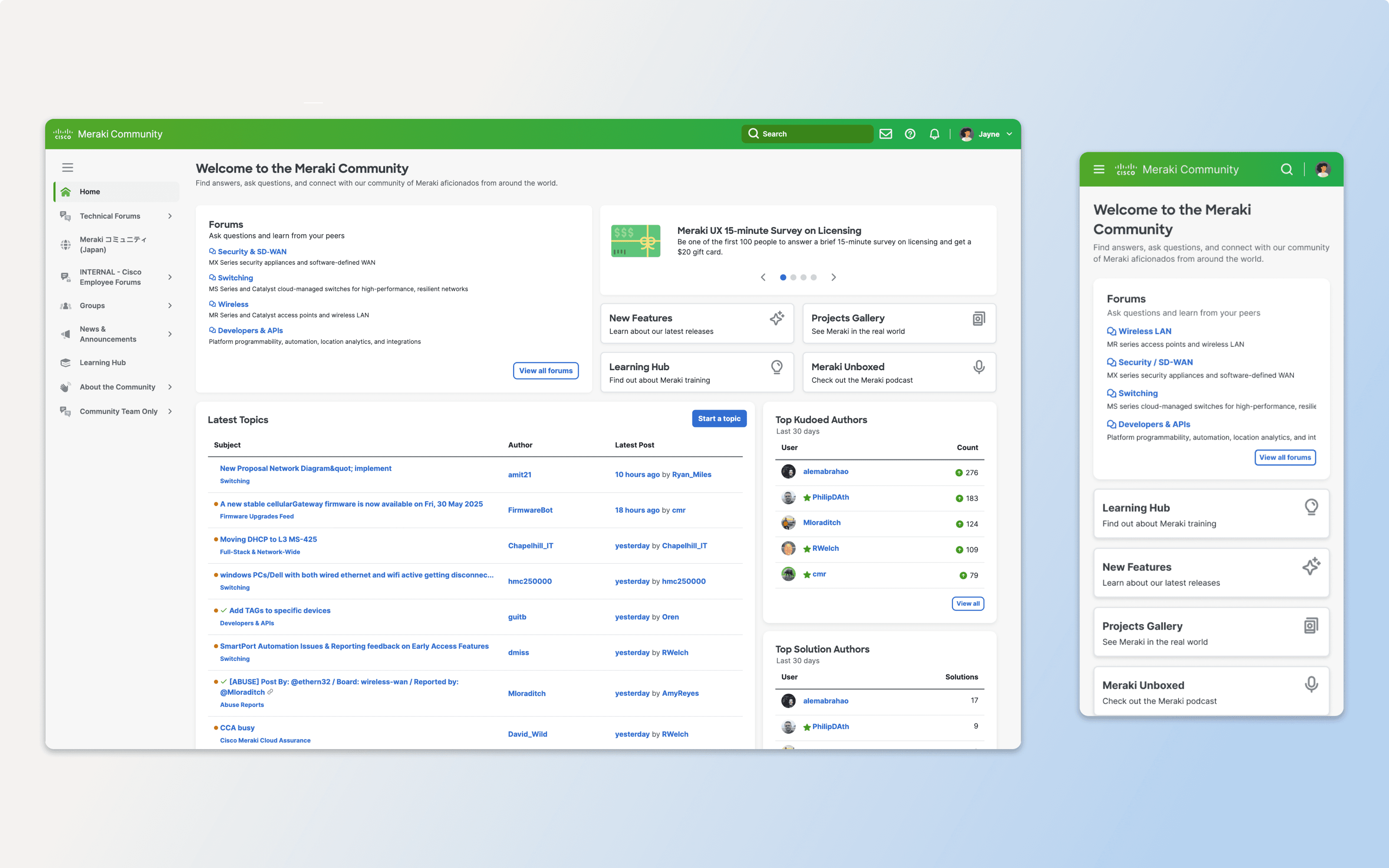
I translated design system components to the platform's visual language, restructured navigation, and improved accessibility, bringing consistency to an experience engineers rely on to find solutions without contacting support.
+10%
70%
Discovery
Translating a design system the platform wasn't built for
Cisco's design system was built for React, but the Community platform ran on Khoros with no native React support.
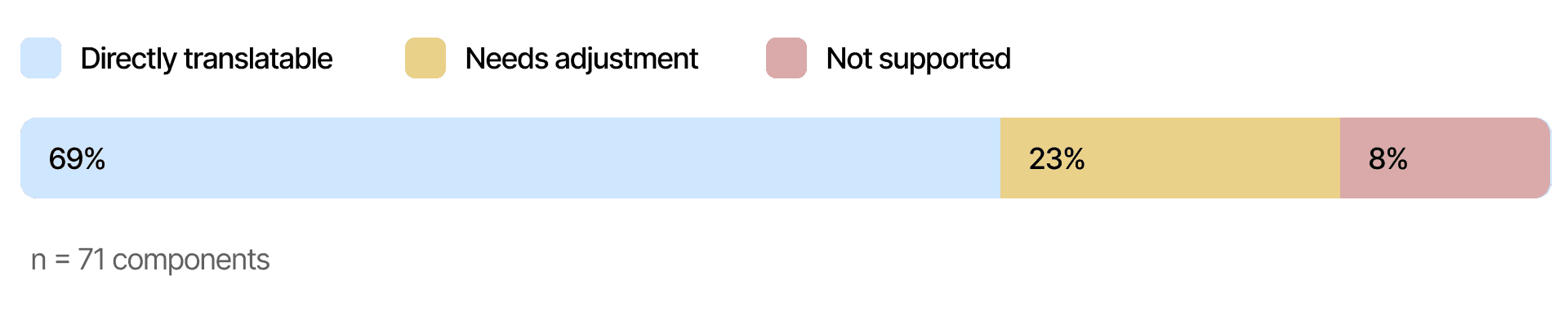
I mapped design system components to their Khoros equivalents, identifying what could be translated visually, what needed approximation, and what couldn't be supported. That mapping also gave leadership a clear picture of feasibility before committing to scope.
Constraints
Scoping the core experience within a fixed timeline
Across stakeholders, there were three definitions of risk. Leadership needed the investment to hold up, the Community team couldn't afford to disrupt engineers mid-troubleshooting, and the design system team needed confidence the adaptation was being done right.
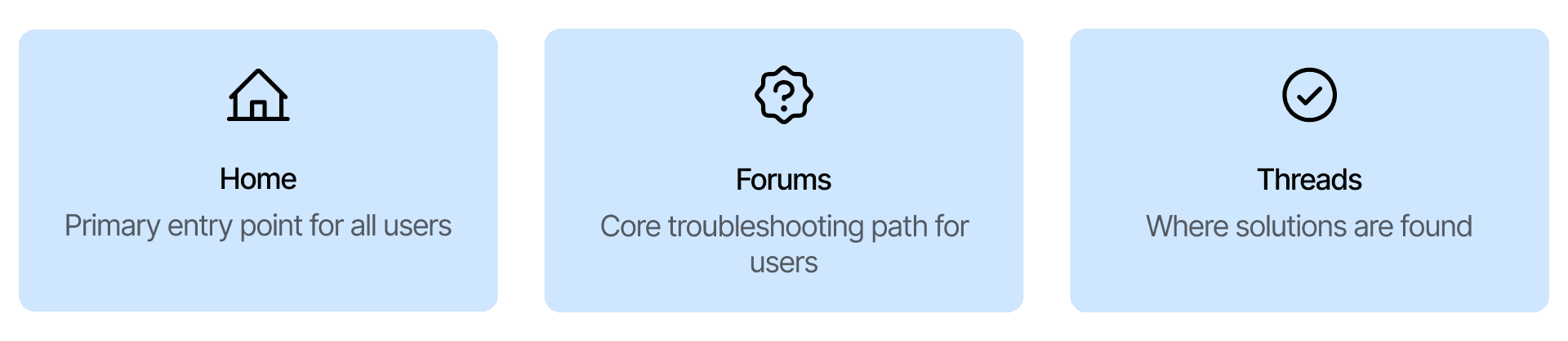
We prioritized the pages users relied on most:
For gaps, I held structured design reviews with both teams to align on what was feasible and what to leave behind. I ran user testing before implementation to reduce disruption risk before anything shipped.
Design decisions
Design optimized for troubleshooting
Navigation that matched users' mental model
Most users didn't know they could jump between forums and groups. I added a new navigation menu and restructured the IA to match the product order users already knew from the Meraki dashboard, making navigation feel familiar without requiring them to relearn anything.
Improving information hierarchy for faster scanning
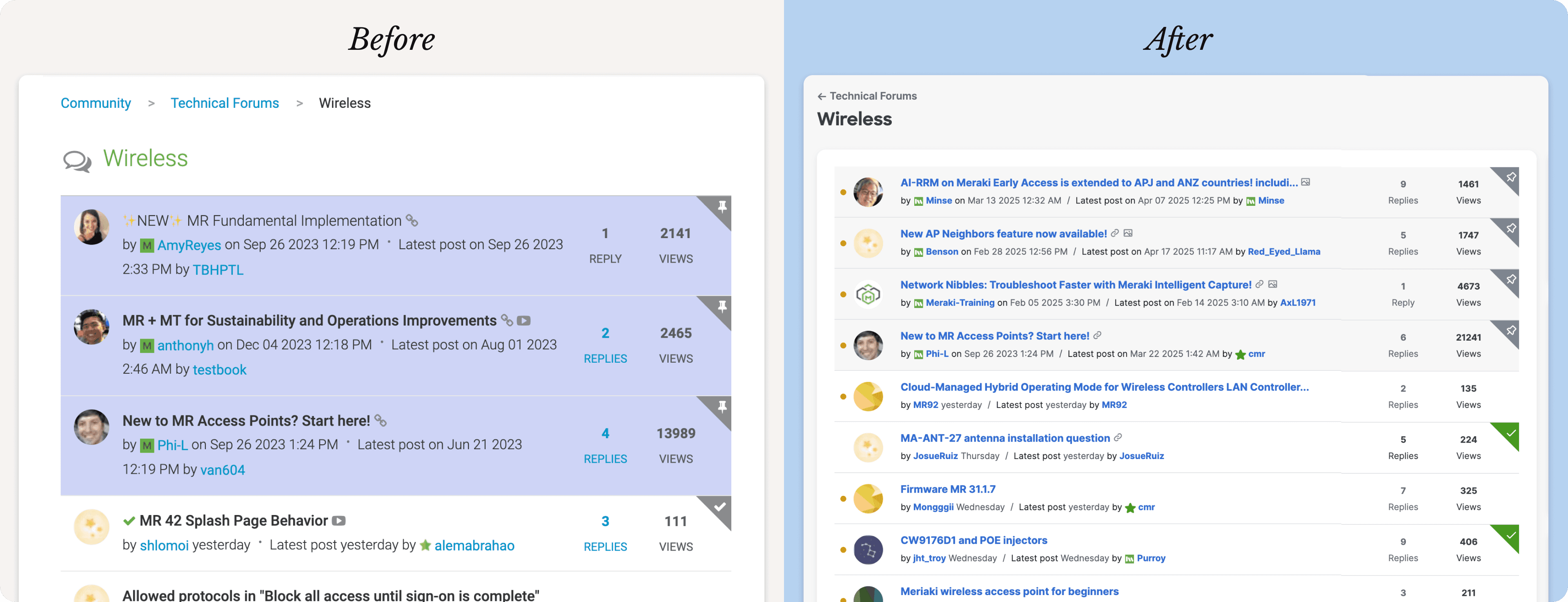
Engineers needed dense layouts, not simpler ones. I standardized typography, spacing, and iconography to create clearer visual hierarchy without reducing information density.
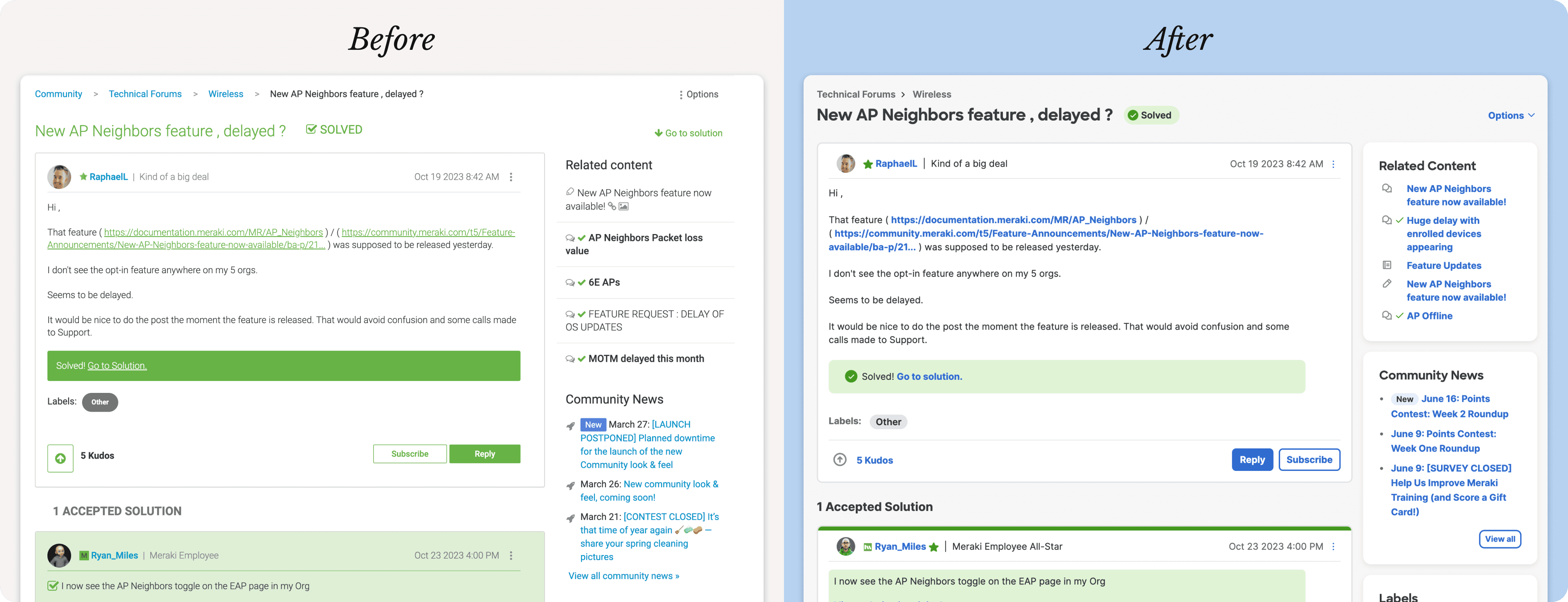
Applying accessibility to improve conversation tracking
Bold and non-bold titles are easy to miss and fail accessibility standards. I improved color contrast, link visibility, and introduced clear indicators for unread threads and solved answers.
Impact
Increased trust in a user's own words
The previous Community interface felt very 'traditional IT type' forum pages, which could present information, but it was ‘get in, find information, get out.’
The refresh design makes me want to spend a little more time not just finding what I need, but also looking for other useful information.
-Senior Network Admin
Learnings
Know what else is running before launch
Pre and post-measurement surveys captured the +10% CSAT increase, but a simultaneous community contest made engagement data harder to isolate.
We saw increases in resolved threads and user engagement, but couldn't cleanly attribute them to the launch. I'd align on measurement baselines earlier and flag parallel initiatives before launch to keep the signal clean.