PM
Platform Consultant
Engineers (2)
Researcher
Data Analyst
Challenge
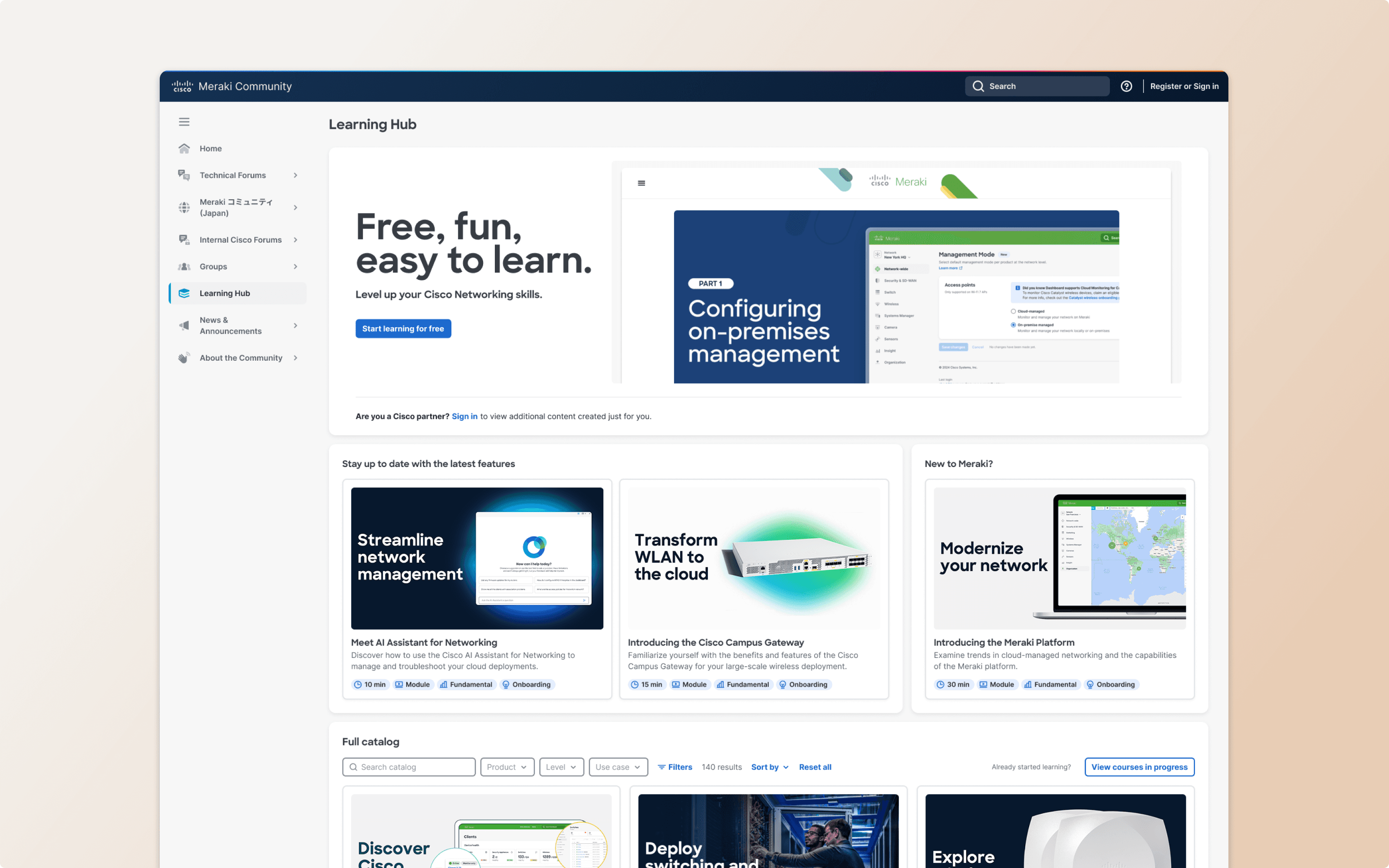
The Cisco Networking Learning Hub offers 140+ learning options for technical users to upskill in networking products.
To increase engagement, leadership assumed that meant more content. The data told a different story: users couldn't assess what was relevant to them before committing.
With no research/data practice or PM in place, I led this initiative end-to-end from reframing the problem to launch.
Outcome
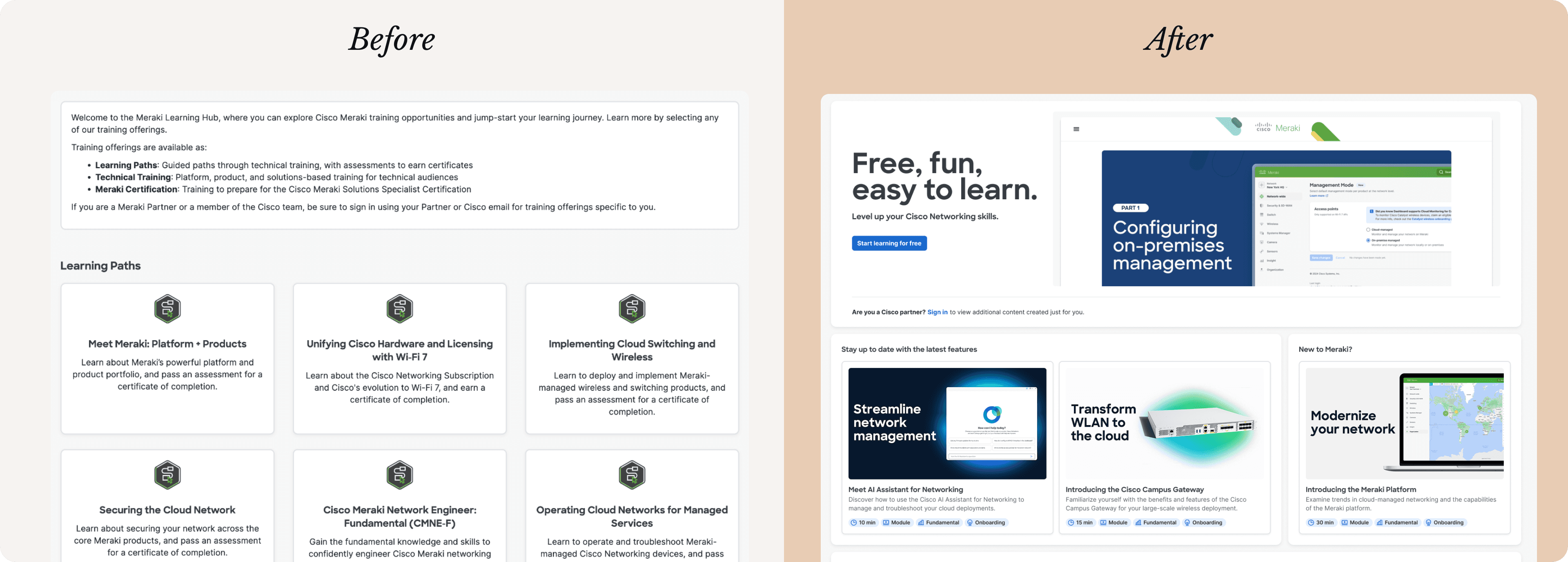
Reframing the problem from content volume to discoverability led to a full redesign of the platform's information architecture, navigation, and course catalog. Launched in 3 months with a contract development team on fixed scope.
+33%
+7%
Discovery
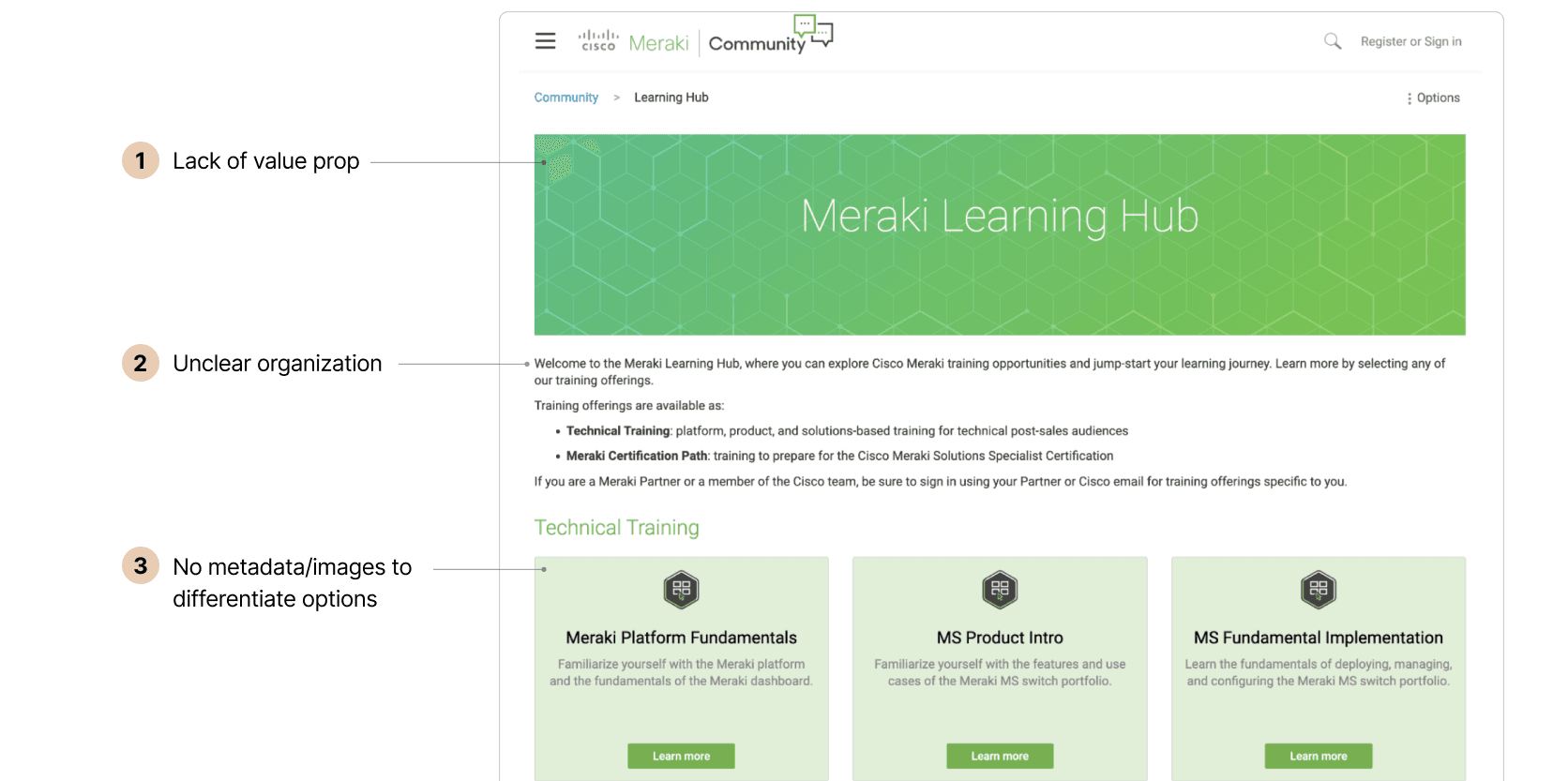
Surfacing the real problem: discoverability
Initial interviews at Cisco Live pointed to a consistent pattern. One engineer put it directly:
To be honest, I would probably just give up because there is no clear way to find out more… it just looks like you have to commit to it without getting a better view of what's inside.
3 root causes explained the drop-off:
Constraints
Building the conditions to ship before I could design
The project got approved, then leadership changed. I needed to rebuild the business case, so I ran funnel analysis that revealed 69% of visitors abandon before enrollment.
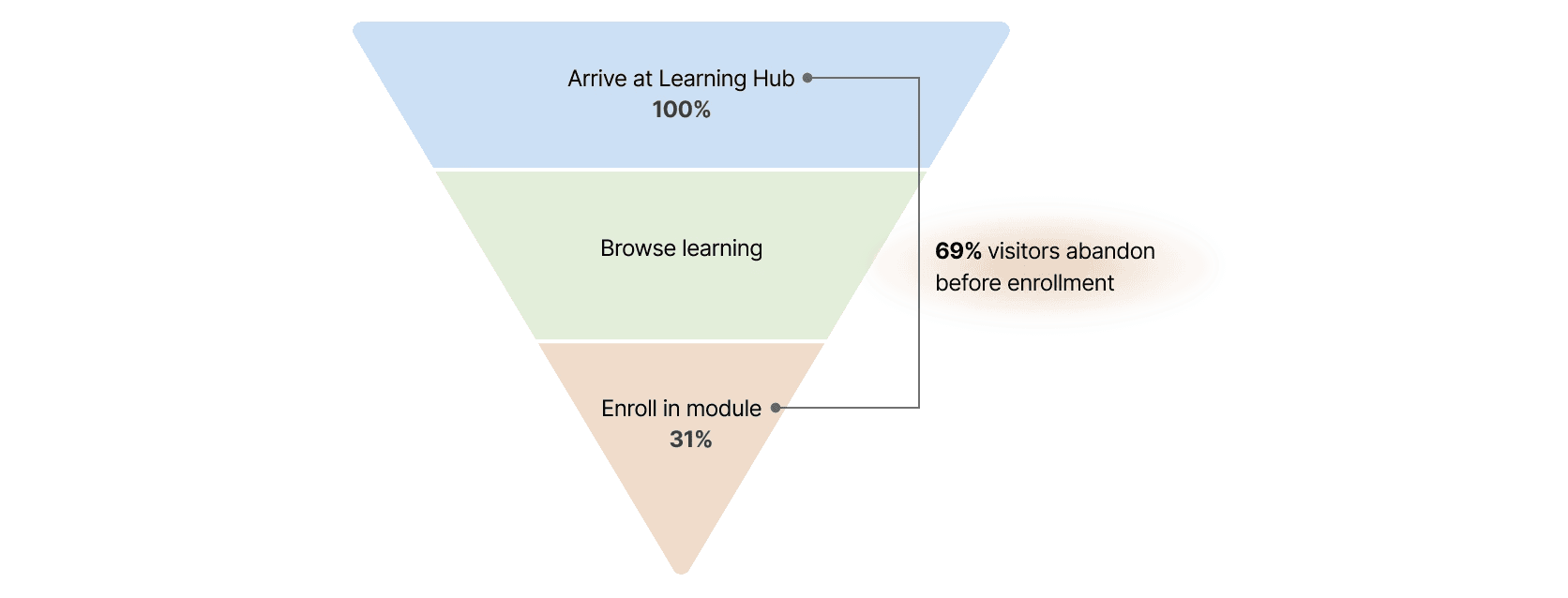
That data made the urgency undeniable.
I wrote the initial PRD defining success metrics and establishing analytics tracking we weren't capturing yet. This made the case for bringing on a researcher, data analyst, and PM to join the project.
Contract developers with fixed scope meant designs had to be precisely specced from the start.
Design decisions
Users become learners when content is free, flexible, and relevant
Surfacing value at every entry point
Free enrollment was a significant motivator, but most users just didn't know. I made "Start learning for free" persistent across the homepage and CTAs, surfacing it at the moments they would've otherwise abandoned.
For new and returning users, featuring relevant content upfront reduced decision fatigue for those browsing: a New to Meraki on-ramp for beginners and new topics for advanced.
Flexible entry points
Engineers value continuous learning but didn't want to commit to a full course or learning path upfront.
I structured the catalog so users could enroll directly in a single module, whether browsing from the homepage or already on a course or learning path.
Product, time, and use cases to assess relevance
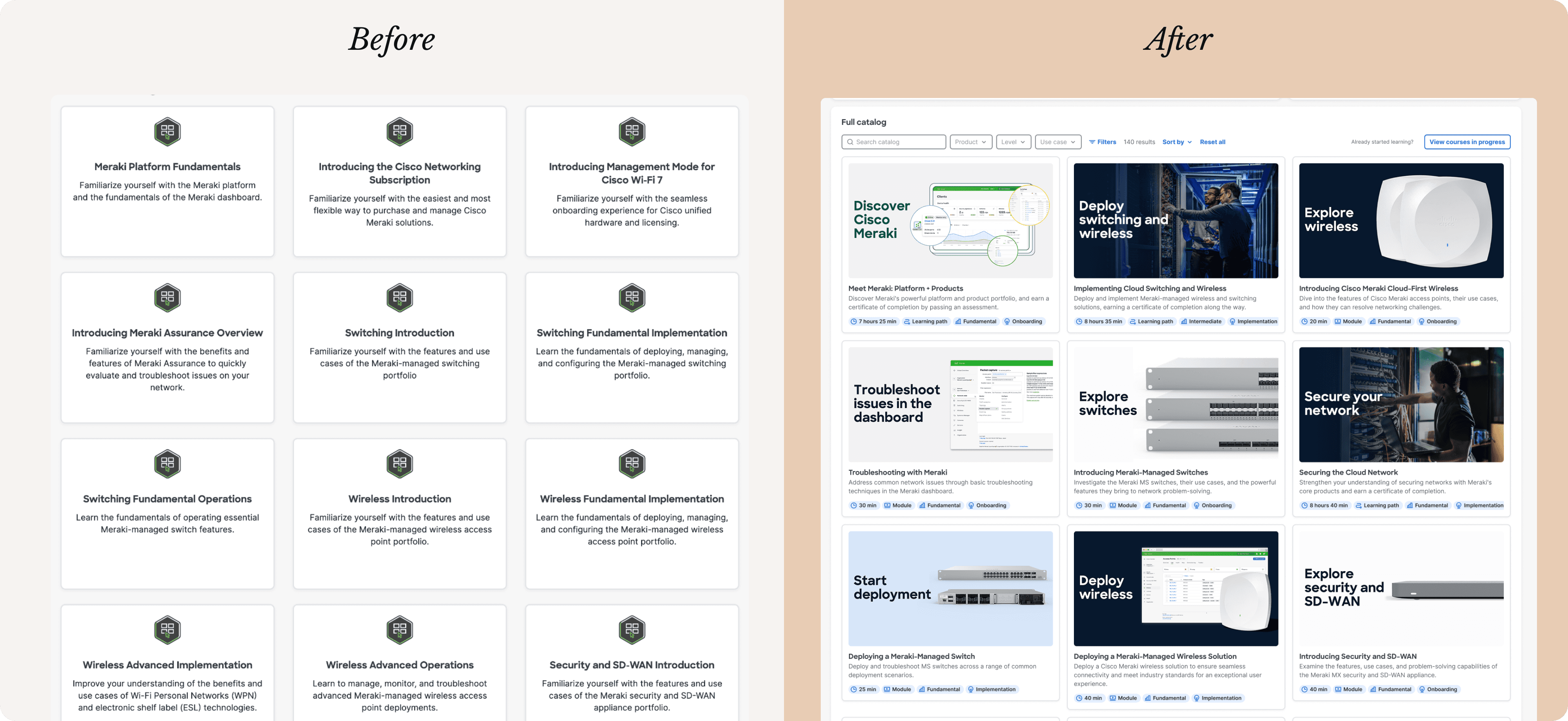
Role filters tested poorly because they were too broad and context-dependent. I replaced them with product and use case filters, a sort by quickest completion time, and preview images for all 140+ catalog options.
Impact
Increased usability in a user's own words
I like the layout. I'm noticing one of the big differences from the previous hub to what I'm looking at now is that it looks like it's easier to specifically find a certain module.
If I'm looking at this and going, what is that I want to learn to myself? I'm straight away looking at, and love the fact that there's a New to Meraki section. It's much easier to find the training courses and information that I want to find.
-Network Engineer
Learnings
Research and data don't just inform design, they protect it
When leadership changed mid-project, having already run interviews and built a data baseline meant I could make the case again without starting from scratch. The early groundwork kept the project alive.
We scoped deliberately around the enrollment drop-off. The data made clear that was where users were losing confidence, so we solved that first. There's more of the journey I'd want to address, but the data gave us the confidence to get the sequencing right.