Content Engineer
Challenge
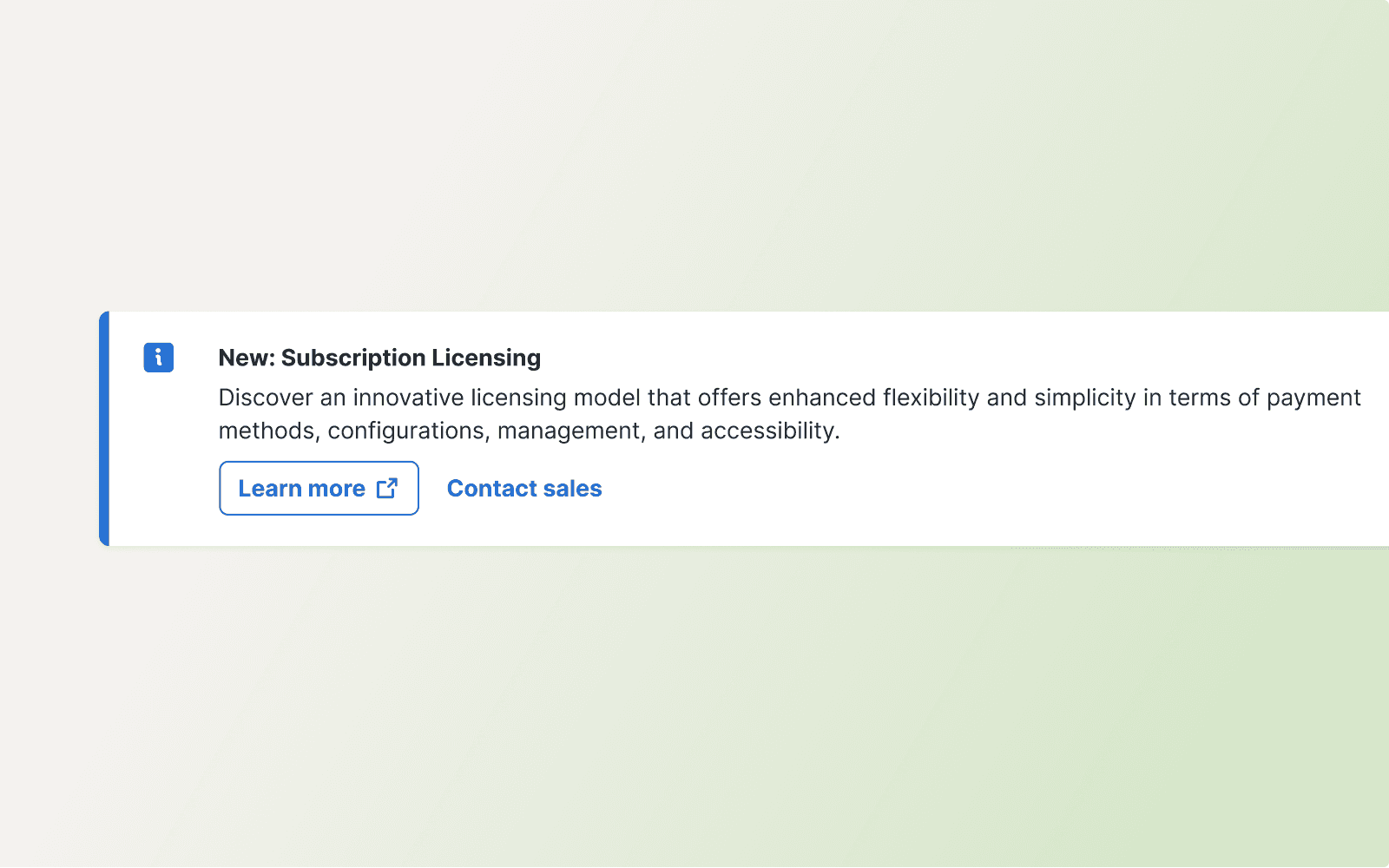
Cisco Meraki enterprise customers had to choose between legacy and subscription licensing at renewal, a high-stakes decision most weren't prepared to make. The product surfaced the choice but didn't explain it. Documentation existed, but wasn't engaging enough to help users understand licensing concepts at the moment of decision.
Outcome
The pilot established in-product learning as a viable adoption lever, informed a new departmental initiative, and contributed to ~4k additional monthly active users.
8%
71%
Discovery
Identifying the opportunity through internal outreach
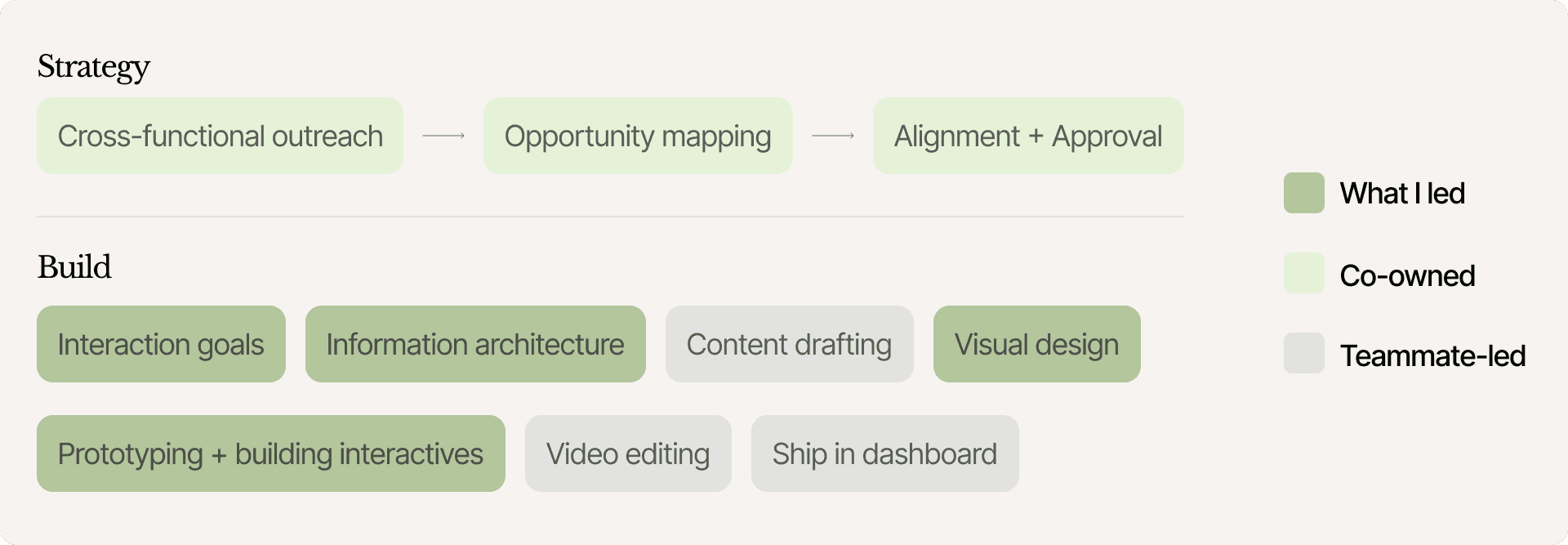
I identified a gap in how our enablement supported product adoption and pitched in-product learning to leadership.
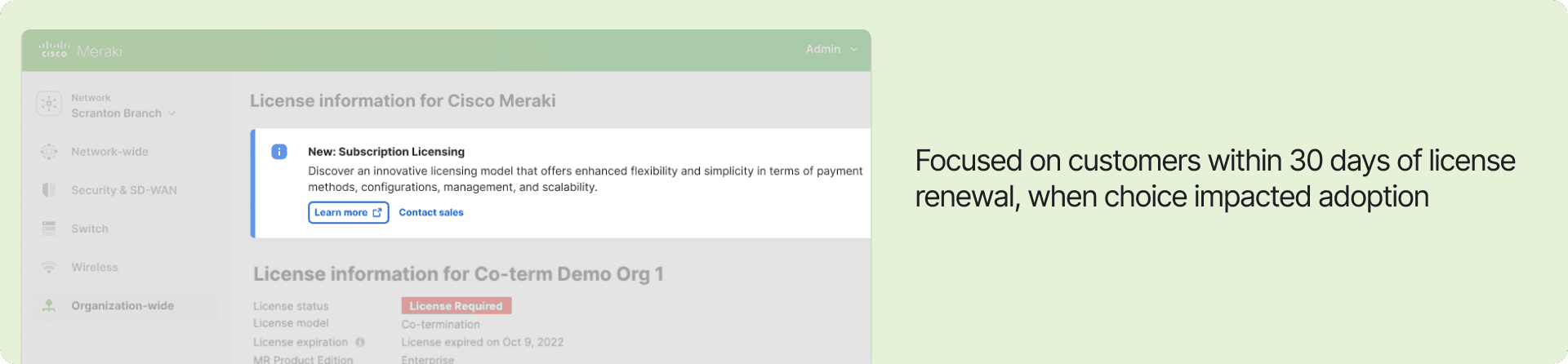
Once approved, I surfaced subscription licensing as the strongest first test case: high stakes, complex concepts, and a clear decision moment where context was missing.
Constraints
No playbook, no established relationships
Our team had few existing relationships with product teams at Cisco, so building visibility and buy-in to source multiple opportunities happened in parallel with designing and shipping.
Design decisions
Interactions that reduce complexity at the point of decision
Narrowing down essential concepts
Beyond benefits and video examples, users needed to interact with the concepts that actually drove subscription value. I narrowed the focus to three:

Prototyping logic before visuals
Licensing logic was complex enough that I prototyped interactions before honing visual design. This confirmed feasibility early and prevented wasted effort on directions that couldn't be built.

Separating concepts without implying dependencies
Showing all concepts at once created cognitive load with no clear starting point. A step-by-step structure implied the concepts were dependencies in the actual licensing process, which they weren't.
I separated them into focused interactions within an FAQ format, matching how users naturally sought to understand new concepts while letting them interact with each one immediately.

Impact
A pilot that outlasted its scope
The pilot established in-product learning as a viable adoption lever and informed a broader departmental initiative.
From there, the approach expanded. Other opportunities like Management Mode and AI Assistant were identified and handed off to teammates to build. Within a year, the initiative had grown to more than four additional opportunities beyond the original pilot.
Learnings
Account for platform dependencies before you build
The learning content was fully built and ready, but launch depended on engineering prioritizing the link and notification context. I'd map platform dependencies earlier, treating them as design constraints from the start rather than a handoff problem at the end.