
Overview
The Cisco Networking Learning Hub offers 140+ learning options for customers and partners to upskill in networking products. To increase engagement, leadership assumed that meant more content. The data told a different story: users couldn’t assess what was relevant to them before committing.
My scope included leading this initiative end-to-end, from discovery to launch:
design (wireframes, prototyping, information architecture)
discovery research and funnel analysis
roadmap prioritization
project management
Challenge
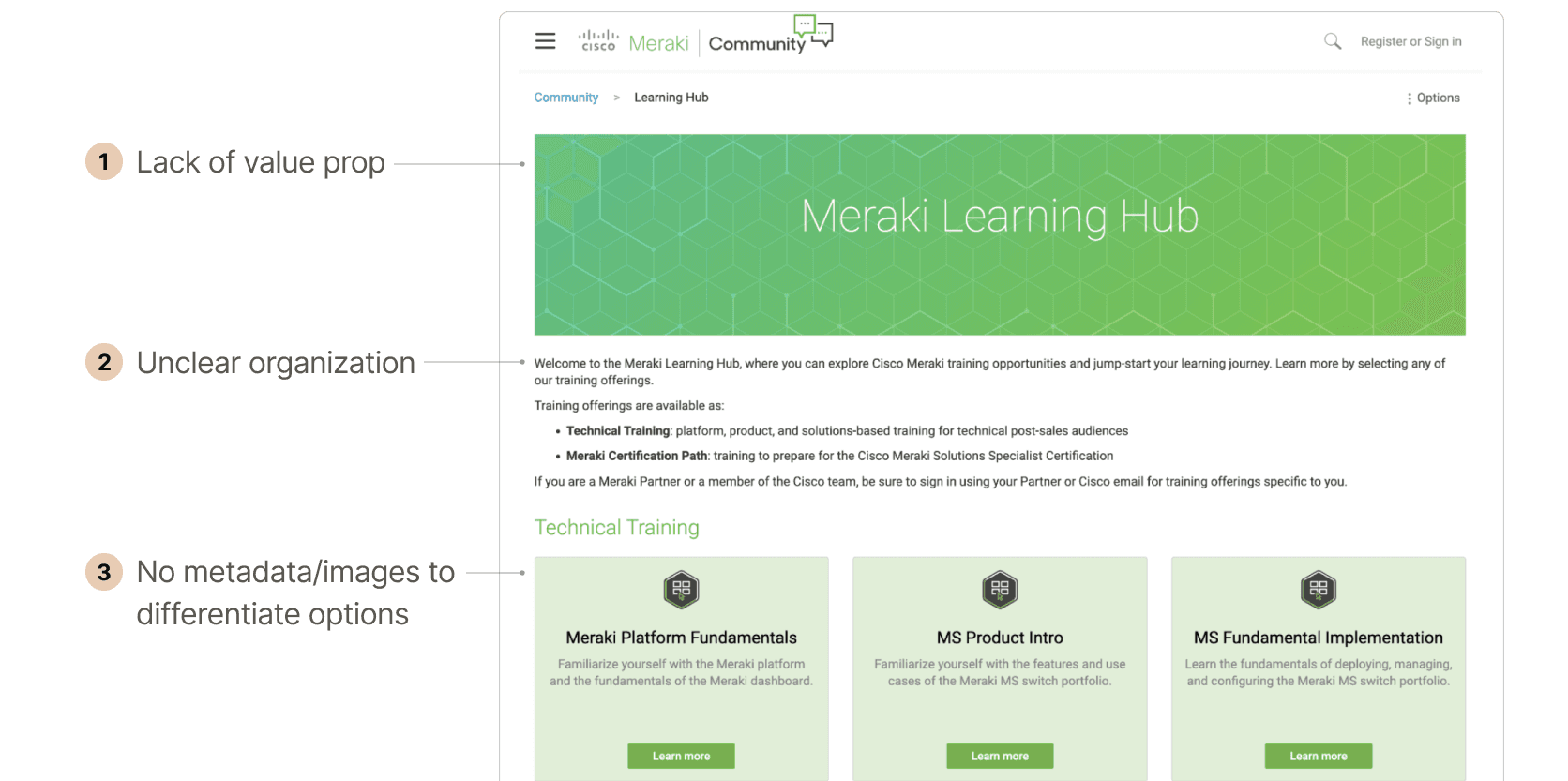
Users couldn’t find relevant content quickly
I led discovery interviews that showed three root causes for drop-off:
Constraints
Reprioritizing the initiative after analyzing 69% drop-off
This initiative was put on hold due to organizational changes. To determine the impact of how many users we were losing, I ran funnel analysis that revealed:
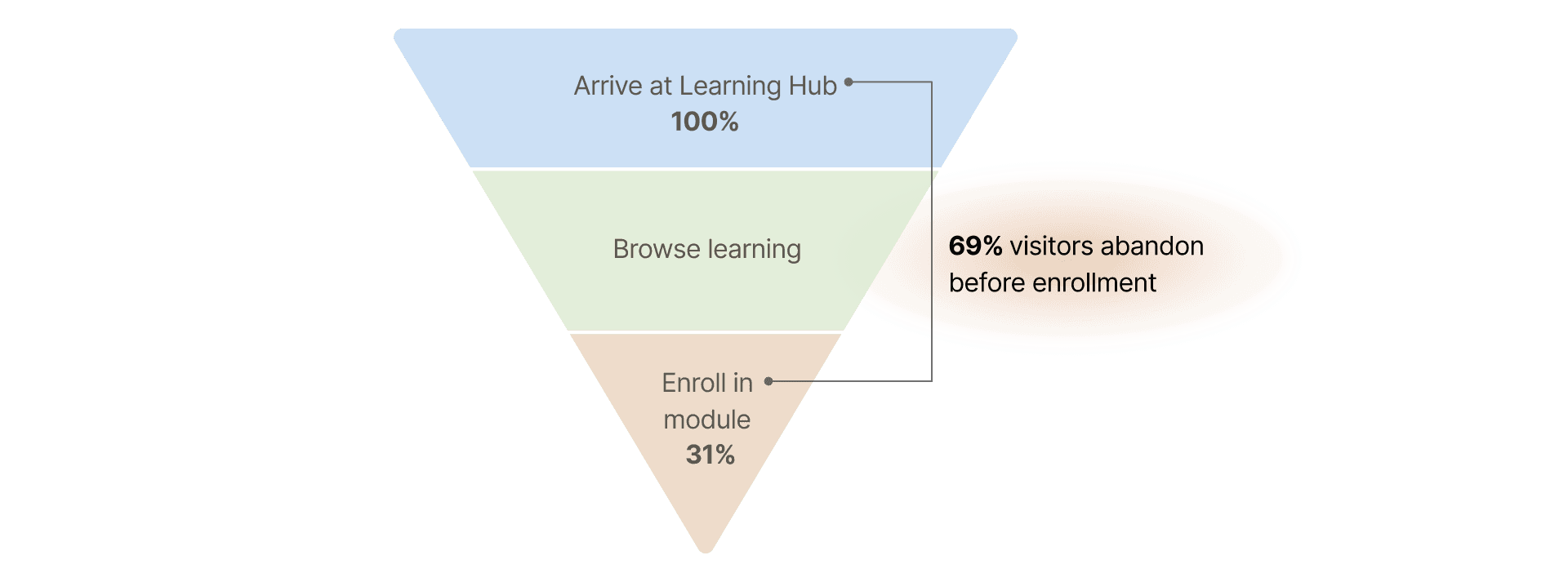
The scale of impacting ~10,000 users per month made the urgency undeniable.
I wrote the initial PRD to define success metrics and establish analytics tracking we still needed to implement. This made the case to form a team, bringing on a researcher, data analyst, and PM.
Working with contract platform consultant and developers for build meant designs had to be precisely specced from the start.
Opportunity
Design for network engineers excited about free learning but time-sensitive
We focused on the following:
Value at a glance
Surface newest content to address main enrollment factors.
Clear, flexible organization
Enrollment by modules or courses to fit around schedules.
Differentiate for relevance
Metadata and images to allow for preview before commitment.
Design
Surfacing key enrollment factors: free, new, and flexible learning
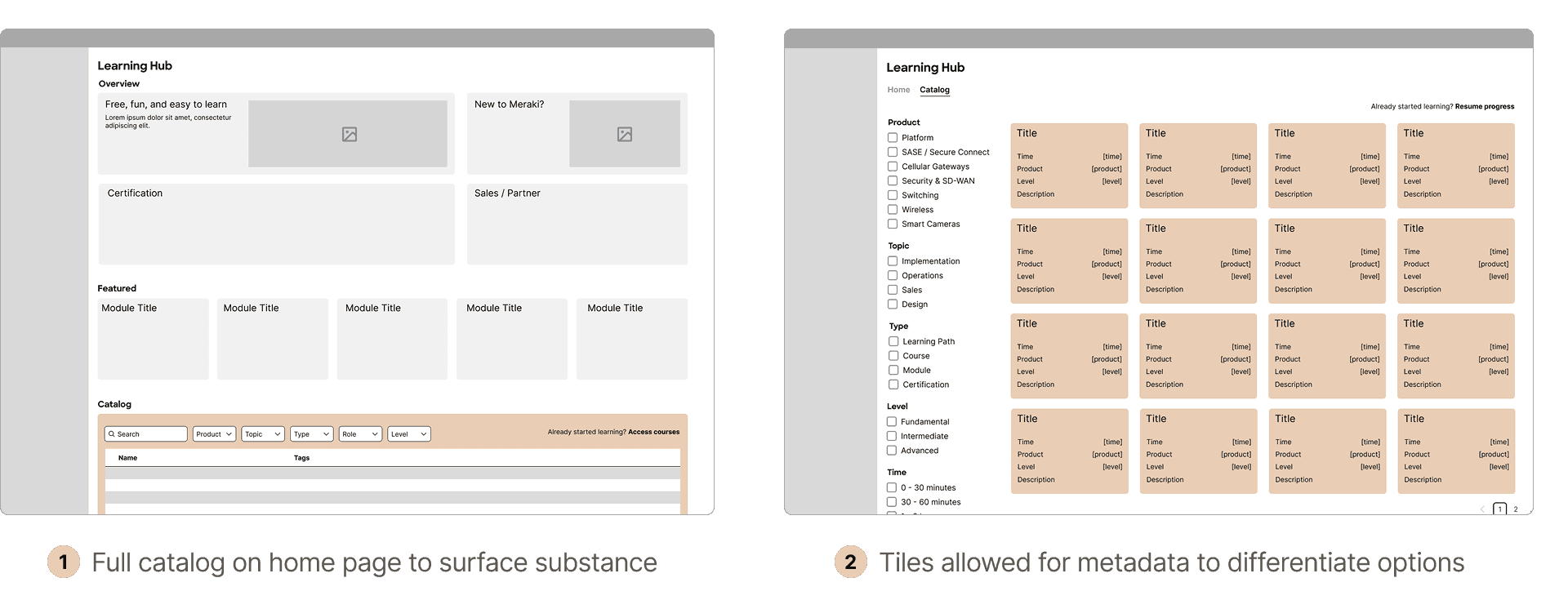
Centralizing content information
Of the wireframes I explored, combining these two balanced showing the full catalog early while differentiating options.
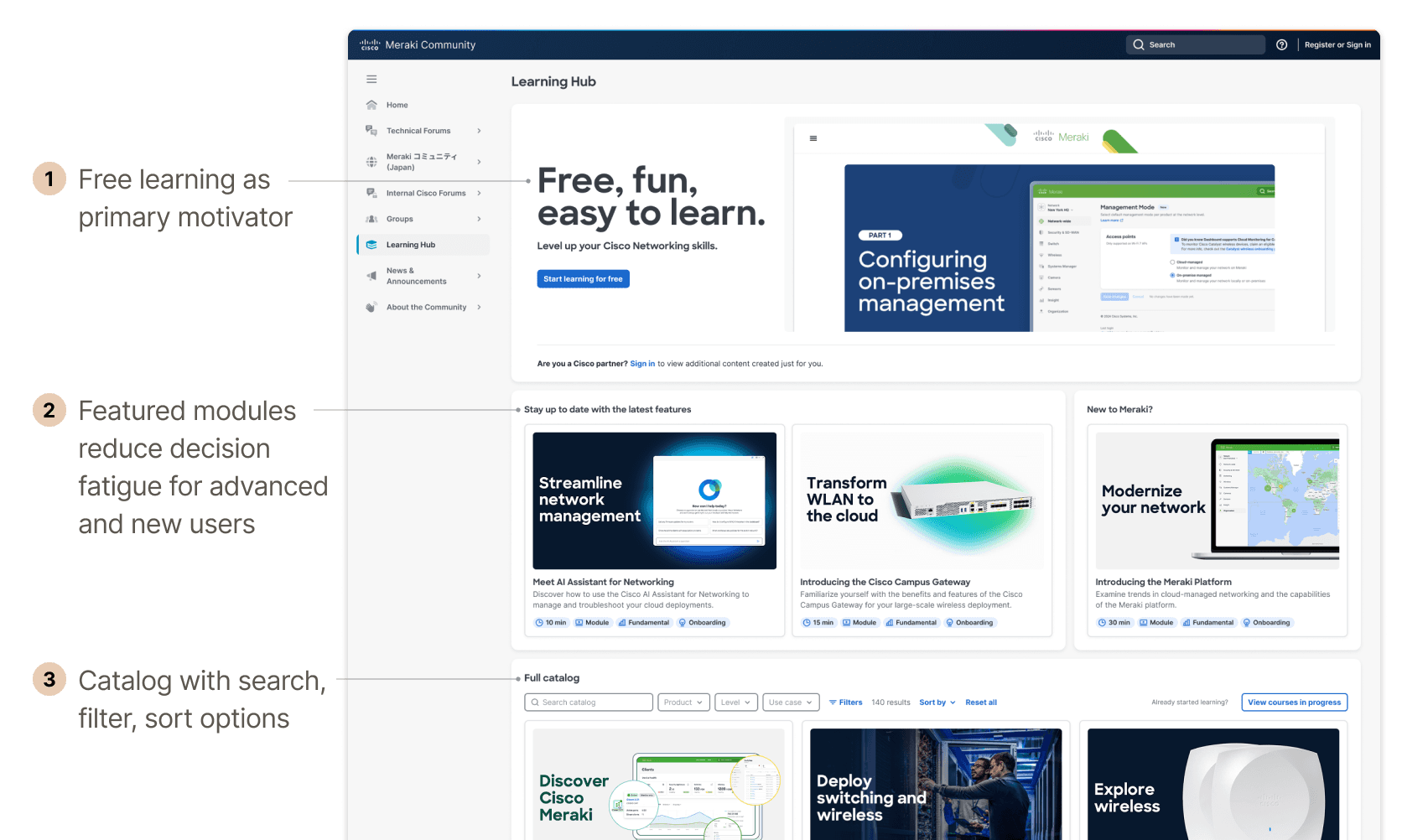
Enrollment driven by new and free content
Our learning content was free, which was a huge motivating factor for users once they found out. Adding it as part of our value prop captured attention quickly, followed by featured content.
Allowing for flexible, modular enrollments
Engineers value continuous learning but didn’t want to commit to a full course or learning path upfront. I designed the flow for users to enroll directly in a single module, whether browsing from the homepage or already on a course or learning path.
Product, time, and use cases to assess relevance
Role-based filters tested poorly because they were too broad and context-dependent. I replaced them, prioritizing product and use case filters with a sort by quickest completion time.

Content
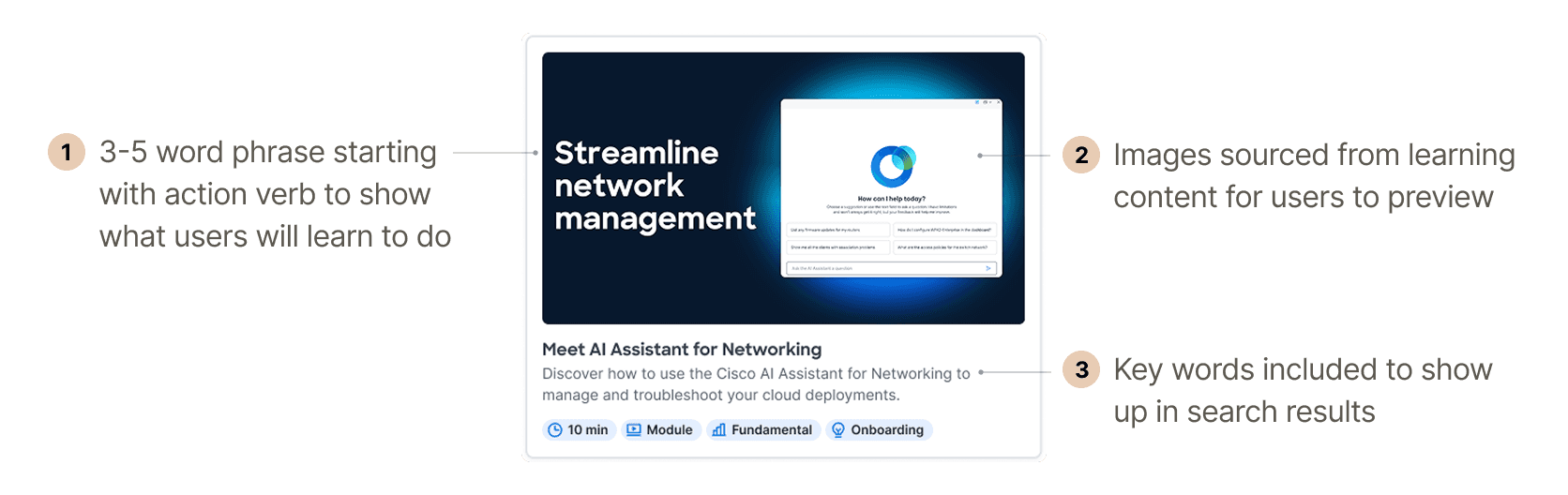
Scaling catalog descriptions, metadata, and preview images
I used AI to generate featured phrases and descriptions to include relevant key words while avoiding repetitive filler phrases across 140+ options. I also created guidelines with AI prompts and templates for my team to use as we published more learning in the future.
Impact
Increased enrollments to monthly active users
We also received positive feedback like:
Reflection
Adapting means making decisions with limited information
There was more of the user journey I wanted to address, especially since there were user needs on tracking progress and post-completion. However, I realized getting resourcing to even address this scope meant making the case this had immediate impact.
While discovery research was helpful to prioritize the project initially, once leadership changed, I needed to analyze behavioral data to show that the problem was at a larger scale. The data I initially had access to was limited to page views, so I also advocated for data infrastructure to track behavior for us to assess as I designed.

